Best Golf Simulator for Garage
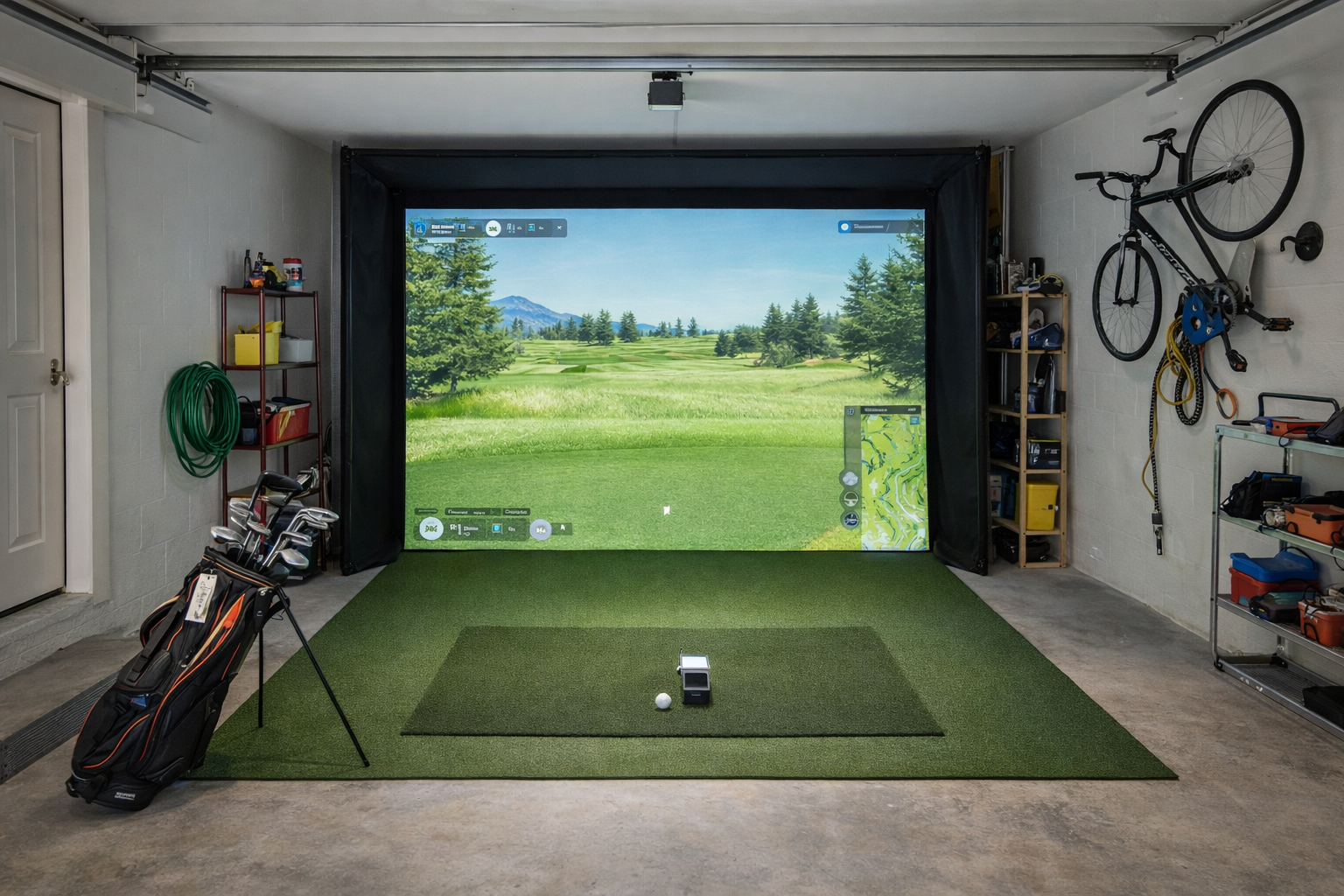
For a lot of houses, the garage is the best real-world place to build a simulator. It usually gives you a cleaner shot at separation, containment, and a semi-permanent setup than a spare bedroom does.
The mistake is assuming any garage is automatically simulator-friendly. Width, depth, slab floors, door hardware, temperature swings, and whether you still need the space for other things all matter more than the word “garage” on its own.
How this site makes recommendations
IndoorGolfSetup.com sorts setups and products by room fit, budget realism, and long-term livability. Read How We Evaluate Golf Simulator Gear for the full methodology.
How this site approaches recommendations
IndoorGolfSetup.com is built around room fit, budget realism, and long-term livability rather than just spec-sheet hype. The goal is to help buyers choose a setup that actually fits their space and feels worth owning after the novelty wears off.
Some pages on this site may include affiliate links. That does not change the recommendations: the goal is still to sort products by room fit, budget, and who each option actually makes sense for. Read the full affiliate disclosure.
- Best overall garage path: balanced room-fit-first build
- Best budget garage path: simpler starter setup
- Best package route: convenience-first garage bundle
- Best for tighter garages: smaller-footprint indoor-friendly setup
Why garages are often the best room
- They usually separate simulator mess and noise from the main living space.
- They often offer a better shot at workable width and height than a spare room.
- They make a semi-permanent setup easier to justify.
What makes garage setups go wrong
- Buyers focus on height and forget depth.
- They assume concrete floors do not matter until the mat becomes a problem.
- They ignore garage door tracks and opener clearance.
- They build something too annoying to set up and tear down.
- They pretend a one-car garage is less compromised than it really is.
| Garage scenario | Best fit | What to prioritize | What to avoid |
|---|---|---|---|
| Two-car bay with decent room | Balanced permanent setup | Mat quality, enclosure fit, monitor-room fit | Oversizing the enclosure |
| Mixed-use garage | Flexible setup | Lower setup friction and easier footprint | Heavy permanent build too early |
| One-car garage | More cautious smaller-footprint build | Honest room measurements | Assuming full-driver comfort |
| Cold or dusty garage | Durability-first setup | Components that suit the environment | Ignoring climate and wear |
The best garage setup paths
Balanced permanent garage setup — best overall
This is the sweet spot for most buyers: a better mat over concrete, an enclosure that actually fits the bay, and a launch monitor that does not fight the room.
- Buy this if: the garage is the main long-term home for the simulator.
- Skip this if: the garage still needs to flip constantly between car storage and sim use.
Starter garage setup — best budget path
Best for buyers who want a functional entry point and are happy to upgrade later rather than overbuild immediately.
Flexible mixed-use garage setup — best for shared space
If the garage still has to serve other purposes, the smartest setup is usually the one that stays worth using without taking over the whole room.
What to buy differently for a garage
- Take mat quality more seriously because concrete makes bad mats feel worse.
- Think harder about footprint and setup friction.
- Be more honest about depth and door clearance than you would in a more dedicated room.
- Prioritize durability if the environment is tougher.
Bottom line
A garage is often the best simulator room in the house, but only when you build for the actual garage you have, not the cleaner imaginary version of it.
Read the room size guide Check ceiling height One-car garage guide See full setup paths