Golf Simulator Room Size Guide
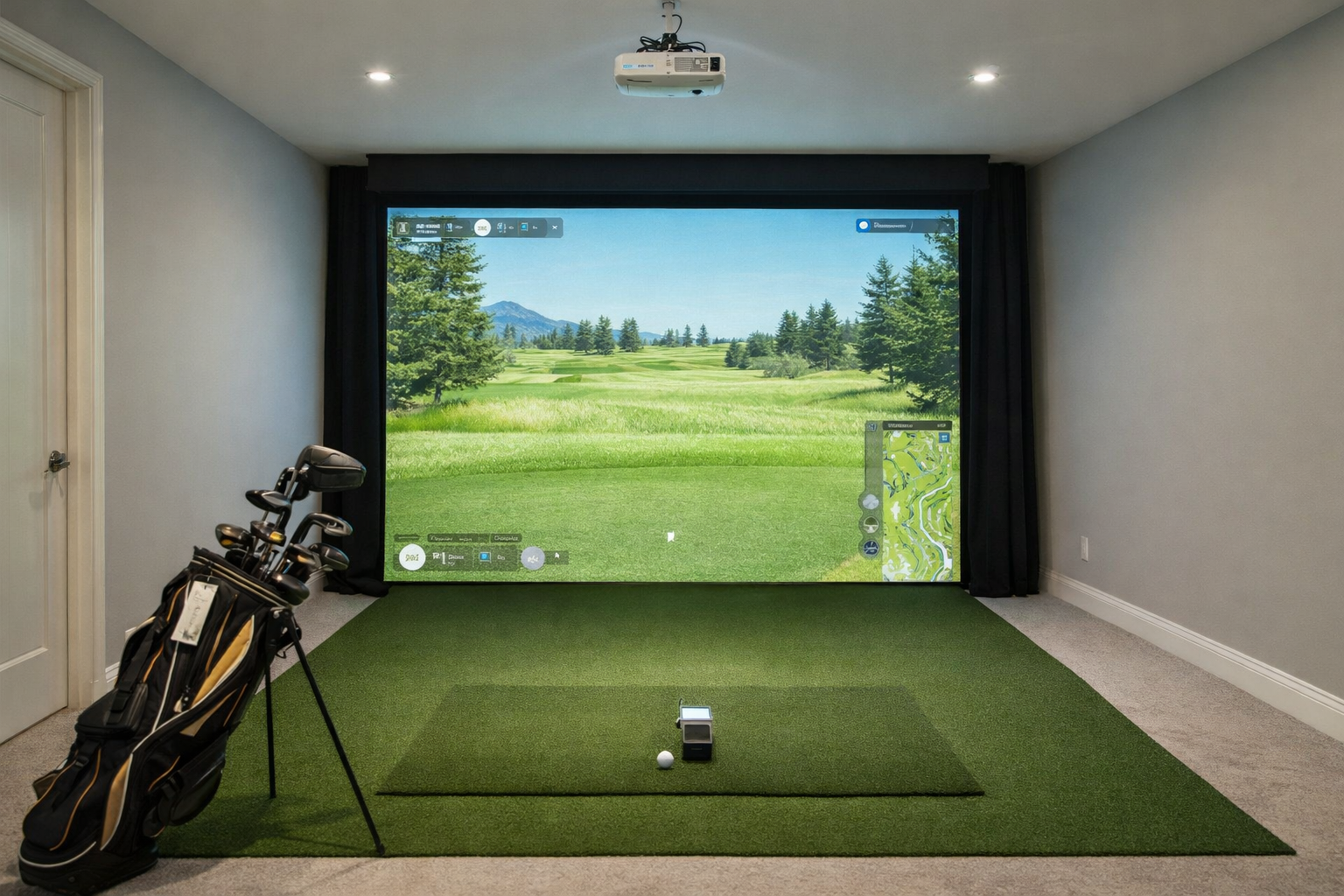
A lot of buyers ask whether a room is big enough for a golf simulator. That is not quite the right question. The better question is whether the room will let you swing naturally, place the launch monitor correctly, and use the setup often enough that it still feels like a good buy six months later.
Still not sure the room works?
These pages help if ceiling height, room depth, or overall tightness still feel like the real problem.
Read these next if the room still feels borderline
These are the pages that usually answer the real follow-up questions once you know the space is not obviously perfect.
The common mistake is treating minimum dimensions like recommended dimensions. A room can technically work and still make the whole build feel cramped, compromised, or annoying every time you set it up.
How this site makes recommendations
IndoorGolfSetup.com sorts setups and products by room fit, budget realism, and long-term livability. Read How We Evaluate Golf Simulator Gear for the full methodology.
Start with three questions
- Can you swing comfortably? Not just clear the ceiling once, but swing without thinking about the room.
- Can the launch monitor live where it wants to live? Some rooms fit camera-based units far better than radar units.
- Can the setup stay simple enough to use often? A room that requires constant workarounds usually leads to less use.
Width matters more than many buyers expect
Width is what usually decides whether a room feels playable or claustrophobic. Tight side clearance affects confidence long before it becomes a true safety issue. That matters even more for taller players, aggressive swings, and mixed-use rooms where you cannot always stand in the perfect spot.
If a room is narrow, the smarter path is often a smaller-space-friendly setup, a simpler enclosure, or a launch monitor that does not force extra compromises.
Depth decides how compressed the whole setup feels
Depth affects ball-to-screen distance, golfer comfort, and whether a radar-based monitor makes sense. It also affects whether the room feels like a simulator room or a forced practice corner.
Shallow rooms can still work, but they usually reward simpler, more indoor-friendly monitor choices and more realistic expectations about projector placement and enclosure size.
Ceiling height decides whether you trust the room
The real issue with ceiling height is not only physical clearance. It is confidence. If you feel the need to steer the club around the room, the simulator will not feel right no matter how good the rest of the gear is.
That is why ceiling height deserves its own page. Lower ceilings can still work, but the best answer often changes with golfer height, swing shape, and whether driver matters.
Minimum workable versus comfortable
Minimum workable
This is the room where the simulator can exist if you accept tradeoffs. You may need to position carefully, choose clubs more selectively, or live with a setup that feels more like practice than a polished sim room.
Comfortable
This is the room where the simulator starts to feel natural. You are not thinking about side walls, back walls, ceiling contact, or whether the launch monitor is barely getting by.
That difference matters because buyers routinely overspend on equipment trying to fix what is really a room problem.
How room type changes the answer
Garage
Often the most practical location because it can tolerate ball containment and swing noise better than the rest of the house. The tradeoffs are slab floors, temperature swings, shared-use space, and garage-door hardware.
Basement
Often the best place for a permanent sim room if the ceiling works. If the ceiling does not work, buyers often fool themselves because the room feels private and finished.
Spare bedroom or bonus room
These rooms can work very well when the dimensions cooperate, but they punish bad launch-monitor choices quickly.
One-car garage
Sometimes possible, often more compromised than buyers want to admit. That is why the one-car garage deserves its own decision page.
Launch monitor choice can make a room feel bigger or smaller
This is one of the biggest missed points in the whole category. A room that feels awkward with a radar unit may feel completely reasonable with a more indoor-friendly alternative. That is why the launch monitor should follow the room, not the other way around.
- If the space is tight, start with photometric vs radar.
- If the space is decent but budget matters, compare Garmin R10 vs MLM2PRO.
- If the space is more serious and indoor-first, look at SkyTrak+ vs Mevo+.
When a room is probably not worth forcing
- The width makes every swing feel guarded.
- The ceiling is technically clear but never comfortable.
- The room only works with a monitor type you already know will be a bad fit.
- The setup has to be moved or rebuilt so often that you will stop using it.
Bottom line
A good golf simulator room is not just the room where the ball stays inside. It is the room where the setup feels easy enough, safe enough, and natural enough that you actually want to use it. Start with the room, then build the equipment around that reality.
Read the ceiling height guide See small-space setup advice See garage-specific setup advice Go back to launch monitors