Best Golf Simulator Screens
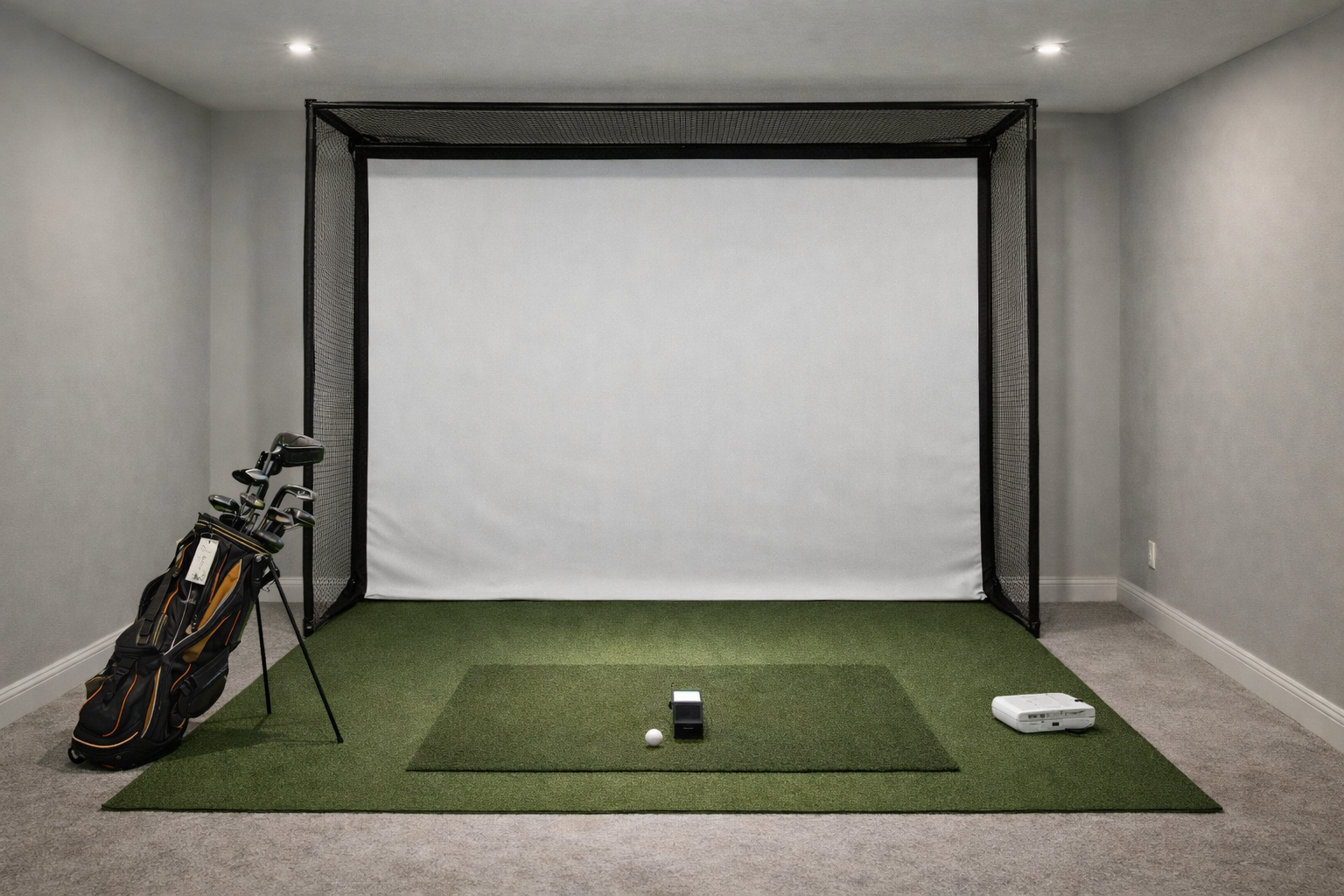
A golf simulator screen can look like a simple line item until you live with the wrong one. Then it becomes obvious how much it affects the room. The best simulator screen is not just about image quality. It is about how the room handles repeated impact, how the screen fits the enclosure, how much bounce-back and noise you can tolerate, and whether the whole setup feels smart once it is actually in use.
Quick picks
- Best overall path: a durable mid-to-premium screen that fits the room and the enclosure properly
- Best budget path: a simpler screen only if the rest of the build is also modest
- Best premium path: a cleaner screen choice when the space is becoming a real simulator room, not just a practice area
Quick product links
Golf simulator screens
What actually matters in a screen
- Durability under repeated impact
- How lively or quiet the screen feels in the room
- Whether the image quality still feels good enough once the build is done
- How well the screen size matches the actual room and enclosure
Best overall screen path
For most buyers, the best overall answer is not the cheapest screen and not always the most expensive one. It is the screen that fits the room and the rest of the build. A strong mid-tier screen in a well-matched enclosure is usually smarter than an expensive screen in a room that is still making the rest of the setup feel compromised.
What cheap screens get wrong
Cheap screens usually go wrong in one of two ways. Either they do not hold up well enough, or they tempt buyers into a bigger visual ambition than the rest of the space can support. That is why cheap is not always smart here. If the screen is too weak for the build, the whole room can feel cheaper than it should.
When premium is worth it
Premium screens make sense when the space is already headed toward a more finished simulator identity. If you already have a good enclosure, a good projector plan, and a room that deserves a cleaner visual finish, then paying up for the screen can absolutely be justified. If the build is still mid-tier or budget-led, premium screen money can be spent too early.
How to size a screen without regret
A screen should be sized as part of the room, not as a standalone object. Width, height, projector choice, enclosure style, and the actual hitting area all matter together. Buyers regret screen choices most when they buy for the idea of the room instead of the room they really have.
What to skip
Skip buying a screen mainly by dimensions or price. A great-looking size on paper can still be a bad decision if it makes the room harder to use, harder to project onto, or harder to integrate with the enclosure and hitting area.
Bottom line
The best golf simulator screen is the one that fits the build as a whole. Think in systems: screen, enclosure, projector, room, and budget. The better those pieces agree with each other, the better the finished simulator room feels.